

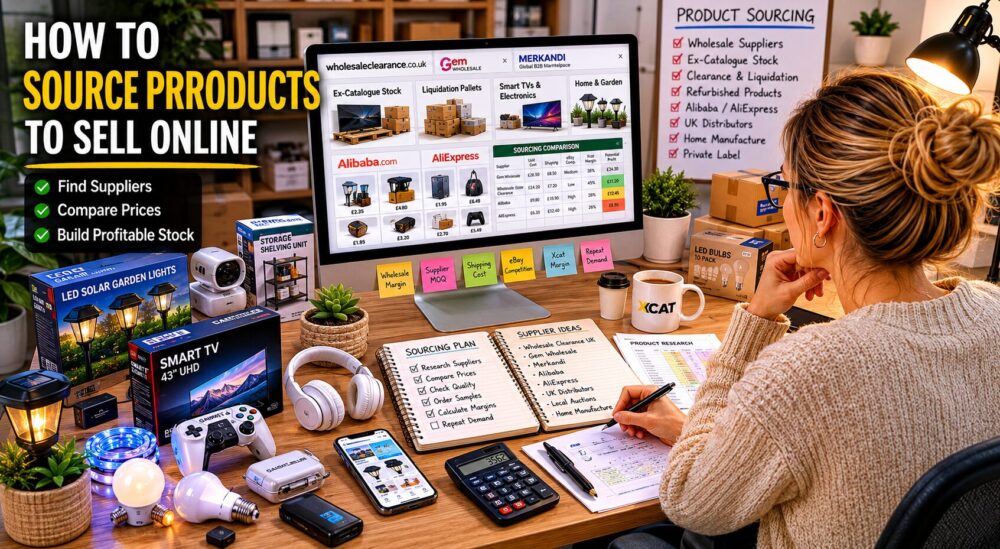
Successful ecommerce businesses are often built on strong product sourcing, healthy margins, and practical products with real customer demand.
Finding the right products to sell online is one of the most important parts of building a profitable ecommerce business.
Many people looking to start selling online focus entirely on marketplaces, websites, or advertising — but sourcing products correctly is often what determines whether an ecommerce business succeeds long term.
Good product sourcing can help sellers:
- Improve profit margins
- Reduce competition
- Offer better quality products
- Create repeat customers
- Build stronger long-term businesses
At Xcat, we believe the strongest ecommerce businesses are usually built around practical products with genuine long-term demand rather than short-term trend products.
What Does Product Sourcing Mean?
Product sourcing simply means finding products to resell online.
Many successful online sellers source products from:
- UK wholesale suppliers
- Trade suppliers
- Clearance wholesalers
- Liquidation stock
- Ex-catalogue products
- Refurbished stock
- Local buying opportunities
- Manufacturers
- Alibaba and AliExpress suppliers
- Private label suppliers
The best sourcing method depends on:
- Your budget
- Your product knowledge
- Storage space
- Shipping costs
- Competition levels
- Your target customers
Using UK Wholesale Suppliers
Many ecommerce businesses start by working with UK wholesale suppliers and trade distributors.
Using UK wholesalers can offer:
- Faster shipping times
- Better communication
- Lower import risks
- More reliable stock availability
- Easier returns handling
Popular wholesale product categories include:
- Home & garden products
- Garden lighting
- LED bulbs
- Storage products
- Cleaning products
- DIY accessories
- Electronics
- Gaming accessories
- Phone accessories
- Smart home products
Many sellers search for:
- UK wholesale suppliers
- Trade suppliers
- Wholesalers UK
- Distributors UK
- Wholesale electronics suppliers
- Home & garden wholesalers
Clearance, Liquidation & Ex-Catalogue Stock
One of the most popular ways to source products online is through clearance and liquidation stock.
Many businesses sell:
- Ex-catalogue stock
- Customer returns
- Clearance pallets
- Overstock products
- Liquidation stock
- Bankrupt stock
- Discontinued products
This can create opportunities to buy products below normal wholesale prices.
Popular clearance product categories often include:
- Smart TVs
- Gaming products
- Home electronics
- Garden products
- Kitchen accessories
- Storage products
- DIY products
- Lighting products
Many independent sellers use wholesale clearance companies, liquidation auctions, and ex-catalogue suppliers to find products with stronger margins and lower competition.
Using Alibaba & AliExpress for Product Sourcing
Global sourcing platforms such as Alibaba and AliExpress are widely used by ecommerce sellers looking for lower-cost products and supplier access.
These platforms can provide access to:
- Electronics
- Phone accessories
- LED lighting
- Home accessories
- Storage products
- Smart home products
- Garden accessories
- Private label products
However, sellers should also understand the risks involved with overseas sourcing.
Potential problems can include:
- Long shipping times
- Quality control issues
- Import taxes
- Supplier reliability problems
- Product compliance issues
- Difficult returns processes
Many experienced sellers order product samples first before committing to larger purchases.
Refurbished Product Sourcing
Refurbished and second-hand products are becoming increasingly popular across ecommerce marketplaces.
Many sellers source:
- Refurbished Smart TVs
- Gaming consoles
- Used electronics
- Power tools
- Tool batteries
- Workshop equipment
- Home electronics
Refurbished products can often provide:
- Better profit margins
- Lower competition
- Strong customer demand
- Sustainable resale opportunities
Many buyers actively search for refurbished products because they offer better value compared to buying brand new items.
Local Product Sourcing Opportunities
Many successful ecommerce sellers also source products locally.
Local sourcing opportunities can include:
- Facebook Marketplace
- Local auctions
- Garage clearances
- Business closures
- Trade clearances
- Retail closing sales
- Car boot sales
- Local classified adverts
This approach can sometimes uncover:
- Low competition products
- Bulk purchase opportunities
- Refurbishment opportunities
- Unique second-hand products
- Specialist tools and equipment
Manufacturing Your Own Products
Some online sellers choose to manufacture or create their own products instead of reselling existing stock.
Popular home-manufactured product categories include:
- Cleaning products
- Candles
- Home décor products
- Storage accessories
- Printed products
- Personalised gifts
- Garden accessories
- Branded merchandise
Manufacturing your own products can help create:
- Unique product ranges
- Better brand identity
- Higher margins
- Lower direct competition
- Long-term customer loyalty
Private Label Products
Many ecommerce businesses also use private label sourcing.
Private label products are products manufactured by a supplier but sold under your own brand.
This approach is popular for:
- Accessories
- Storage products
- Home & garden products
- LED lighting
- Cleaning products
- Phone accessories
- Lifestyle products
Private label selling can help businesses build stronger brand identity and repeat customer relationships over time.
Avoiding Bad Suppliers
Not all suppliers are reliable.
Before placing large orders, sellers should carefully check:
- Supplier reviews
- Product quality
- Shipping times
- Communication quality
- Return policies
- Import costs
- Product compliance requirements
Some suppliers may offer unrealistically cheap products that create:
- Poor quality issues
- High return rates
- Negative reviews
- Long delivery delays
- Customer complaints
Many experienced sellers start with small test orders before scaling larger purchases.
How Sellers Compare Products & Margins
Many successful ecommerce sellers compare:
- Wholesale prices
- Marketplace fees
- Competition levels
- Shipping costs
- Profit margins
- Product demand
This often involves using:
- Spreadsheets
- Marketplace research
- Competitor analysis
- Supplier comparisons
- Pricing calculations
Many sellers now focus heavily on lower competition opportunities and stronger long-term margins rather than simply chasing the highest sales volume.
Why Practical Products Often Work Best
Many of the strongest ecommerce businesses are built around practical products people genuinely use regularly.
Examples include:
- LED bulbs
- Cleaning products
- Storage solutions
- Garden lighting
- DIY accessories
- Workshop consumables
- Phone accessories
- Smart home products
- Replacement parts
These products often create:
- Repeat demand
- Better long-term margins
- More stable sales
- Repeat customers
- Lower advertising dependence
Why Xcat Focuses on Practical Product Ecosystems
At Xcat, we believe long-term ecommerce growth works best when sellers focus on practical products with real customer demand instead of short-term hype products.
This includes categories such as:
- Home & garden products
- Electronics
- Gaming accessories
- Smart TVs and home entertainment
- DIY products
- Workshop products
- Storage solutions
- Cleaning products
- Refurbished products
The goal is to build sustainable ecommerce businesses with repeat customers, healthier margins, and practical long-term product demand.
Build a Better Product Sourcing Strategy
If you are planning to start selling online, product sourcing should become one of your biggest priorities.
Learn how suppliers work. Compare margins carefully. Explore practical products with repeat demand. Most importantly, focus on building sustainable long-term ecommerce growth.
You can also explore:
- How to Start an Online Business in the UK
- Selling Products Online in the UK
- Best Selling Products Online in the UK
- How to Source Products to Sell Online
- Websites Like eBay UK
- Selling Used & Refurbished Products Online
- Best Selling Sites & Marketplaces in the UK
- Become an Xcat Fulfilment & Sales Associate