


Cheap Solder Flux vs Xcat Premium Flux
When choosing soldering flux or solder flux paste, it is tempting to buy the cheapest tin available. After all, many flux products look similar on the shelf. However, the difference between cheap solder flux and a carefully formulated premium rosin flux becomes obvious as soon as you start soldering.
Flux is one of the most important materials used in electronics and electrical soldering. It removes oxidation, improves wetting, and allows molten solder to flow smoothly across metal surfaces. Without good quality flux, solder joints can become weak, dull, or unreliable.
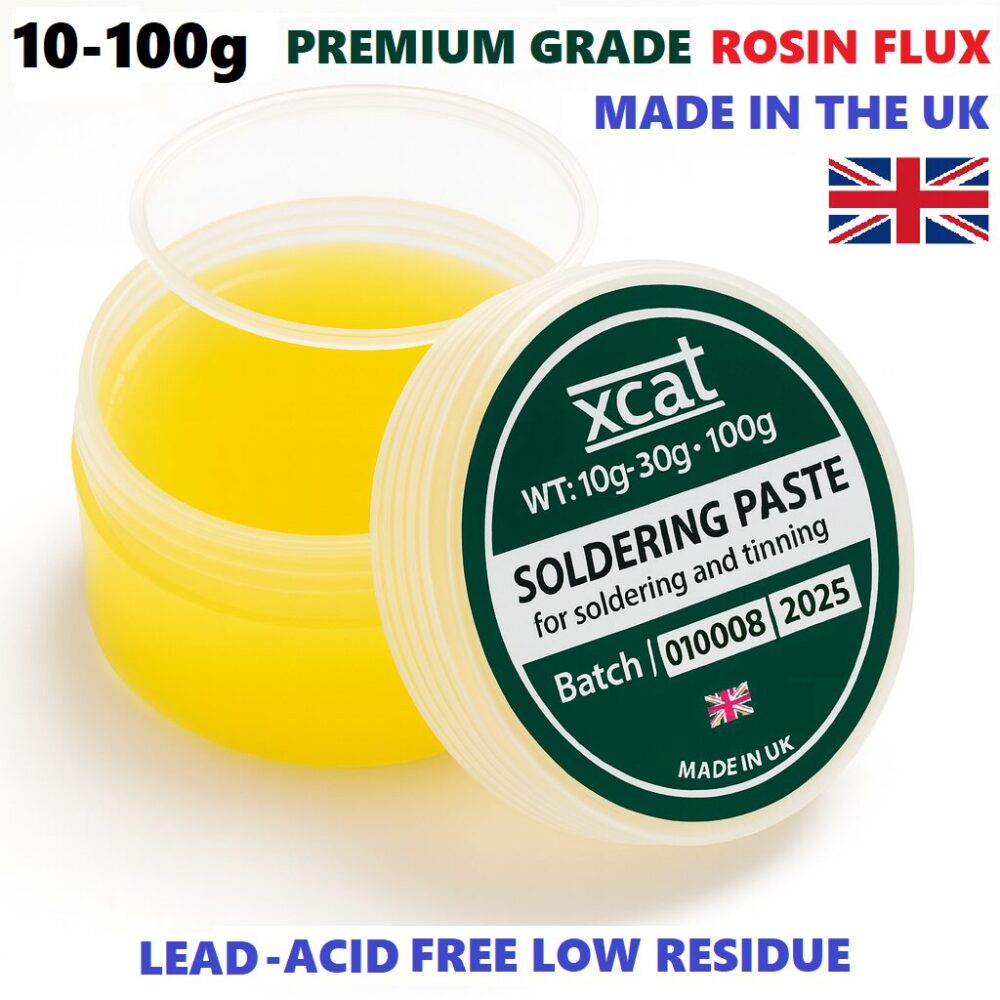
The Downsides of Cheap Solder Flux
Low-cost solder flux paste is often produced with inferior rosin substitutes, recycled materials, or excessive fillers. While it may initially appear to work, the performance during soldering is frequently inconsistent. Cheap flux often dries out quickly or forms a crust when heat is applied, preventing solder from flowing properly.
This is particularly problematic in electronics work where reliable connections are essential. If the flux burns off too quickly, oxidation returns and the solder joint can become weak or brittle.
- Flux that dries out or crusts over during soldering
- Sticky or corrosive residue left on joints
- Greater risk of long-term corrosion
- Strong or unpleasant fumes during heating
- Material that burns away too quickly
- Inconsistent solder flow and unreliable joints
Because of these issues, very cheap flux products are rarely suitable for electronics soldering, PCB repair, or precision electrical work. Once flux begins to harden or burn off too early, solder flow becomes unpredictable and joints often need to be reworked.
Why Xcat Premium Soldering Flux Performs Better
Xcat Premium Grade Flux is formulated to provide consistent results for both professionals and serious hobbyists. Instead of aggressive chemicals or filler-heavy compounds, it uses high-quality rosin-based solder flux combined with balanced activators.
This formulation allows the flux to remain stable during heating while maintaining excellent solder wetting and controlled activation. The result is smoother solder flow and cleaner electrical connections.
- Smooth, predictable solder flow
- Clean and professional-looking solder joints
- Minimal residue after soldering
- Suitable for electronics, wiring, and PCB repair
- Stable performance across a wide temperature range
Flux vs No Flux Soldering
Some beginners wonder whether soldering can be done without flux. While certain solder wires contain a small amount of internal flux, additional soldering flux paste dramatically improves joint quality.
When flux is present, it removes surface oxidation and allows solder to bond properly with the metal. Without flux, solder often beads up instead of flowing, leading to weak connections known as dry joints.
For this reason, most professional technicians apply extra flux when working on electronics repairs, circuit boards, connectors, or automotive wiring. The improvement in joint reliability is significant.
Why Flux Quality Matters
Flux does far more than simply help solder melt. It directly affects joint strength, electrical conductivity, and long-term reliability. Poor-quality flux can leave corrosive residues or produce weak solder bonds that fail months later.
High-grade rosin flux, by contrast, protects the joint while soldering and helps produce a smooth, shiny connection that remains electrically stable over time.
For a technical explanation of how flux works during soldering, you can read Wikipedia’s guide to flux in metallurgy .
Final Thoughts
While cheap solder flux may appear to save money, it often leads to inconsistent joints and additional repair work. Choosing a reliable premium soldering flux provides better control, cleaner connections, and greater confidence in every soldered joint.
If you want dependable results for electronics, wiring, or general soldering work, Xcat Premium Grade Solder Flux is designed to deliver professional-level performance.