
Countersink Drill Bits for Wood & Metal – Clean, Accurate Finishes
Shop countersink drill bits for wood and metal, designed to create clean, flush screw finishes with precision and consistency. Whether you're working on cabinetry, joinery, general DIY projects or professional installations, countersinks are essential for achieving a neat, professional result. All products are UK stocked for fast dispatch, so you can get the right tools quickly without delays.
Countersink drill bits are specifically designed to create a tapered recess that allows screw heads to sit flush or slightly below the surface of the material. This not only improves the visual finish of your work but also helps prevent snagging, reduces material stress, and ensures stronger, more secure fixings. Without a proper countersink, screws can sit proud, leading to poor finishes and potential damage over time.
For woodworking applications, countersinks are widely used when installing hinges, fittings, brackets, and decorative fixtures. They allow screws to sit neatly within the material, which is especially important for visible surfaces such as furniture, doors, and trim work. In softwoods and hardwoods alike, using the correct countersink bit helps prevent splitting and improves accuracy when driving screws.
For metalworking, countersink drill bits are commonly used to deburr holes and prepare surfaces for flush fasteners. This is particularly important when working with sheet metal, aluminium, or steel components where clean finishes and precise tolerances are required. A properly countersunk hole ensures that fasteners sit correctly, improving both appearance and structural integrity.
Choosing the right countersink drill bit depends on the material and the type of work you are carrying out. Multi-material countersinks are suitable for general-purpose use, while specialised bits are designed for specific materials such as hardwood, softwood, or metal. Many countersinks feature multiple cutting edges to ensure smooth, chatter-free cutting and a clean finish with minimal effort.
For best performance, countersink drill bits should be used at controlled speeds with steady pressure. High speeds can cause overheating, particularly when working with metal, while too much pressure can lead to uneven cutting. Using a consistent drilling technique will produce smoother results and extend the life of your tools.
You can use countersink bits effectively with both cordless and corded tools depending on your setup. For flexibility and ease of use on-site or around the workshop, explore our range of
cordless power tools. These are ideal for quick adjustments and portable work where access to power may be limited.
For more demanding tasks or continuous use, especially when working with harder materials,
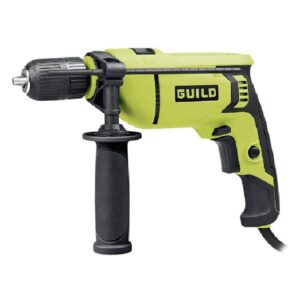
corded drills provide consistent power and reliable performance. This makes them a strong choice for repetitive drilling, workshop use, or heavier-duty applications.
Surface preparation also plays a key role in achieving the best results. Before countersinking, ensure the material is clean and free from debris. After drilling, you may want to refine or smooth the surface using
abrasives and sanding tools, particularly for visible finishes or fine woodworking projects. This helps achieve a clean, professional look and ensures components fit together perfectly.
Countersink drill bits are available in a range of common angles, with 90° being the most widely used for general applications. Other angles, such as 82° or 100°, are used for specific fastener types and standards. Matching the countersink angle to the screw head is important for achieving a proper flush fit and preventing damage to both the screw and the material.
Durability is another important factor when selecting countersink bits. High-speed steel (HSS) options are suitable for general use, while coated or hardened variants offer improved wear resistance and longer tool life. For frequent use or tougher materials, investing in higher-quality bits will provide better performance and reduce the need for frequent replacements.
In addition to creating recesses for screws, countersinks can also be used for deburring and finishing drilled holes. Removing sharp edges not only improves safety but also enhances the overall quality of the workpiece. This makes countersinks a versatile addition to any toolkit, suitable for both functional and finishing tasks.
Whether you are a DIY enthusiast working on home improvements or a professional tradesperson carrying out precise installations, having the right countersink drill bits makes a significant difference. They improve accuracy, enhance the final finish, and help ensure that every fixing is secure and properly seated.
For a deeper technical explanation of how countersinks work and their applications, you can refer to this external guide:
Countersink (Wikipedia).
Browse our range of countersink drill bits today to find the right solution for your project, with reliable UK stock, fast delivery, and tools designed for consistent, high-quality results.
Related Drill Bit Types
Back to
Drill Bits
- BEST
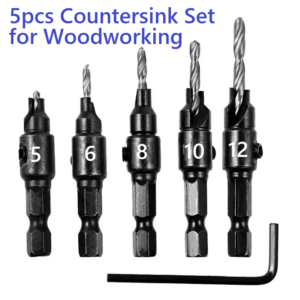
5-Piece HSS Countersink Drill Bit Set – Hex Shank Pilot Hole Bits for Woodworking
£6.99
9 in stock | 18 soldSeller does not ship to your location - BEST
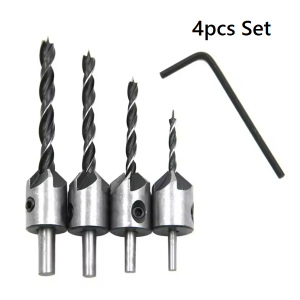
4x Quality Carpentry Countersink Drill Bit Set – Woodworking Pilot Hole Drilling
£6.72
6 in stock | 20 soldSeller does not ship to your location - BEST
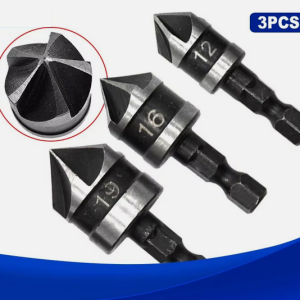
3-Piece 90° Countersink Set – 12/16/19mm Hex Shank, 5-Flute Black Chamfer Bits
£5.95
1 in stock | 5 soldSeller does not ship to your location