



A Complete Guide to Rewiring a House or Extension in the UK
Rewiring a house is a major undertaking, and it’s essential to get it right. Whether you’re renovating an older property or upgrading a recent extension, a full or partial rewire ensures your electrical system is safe, efficient, and compliant with the latest UK standards. Importantly, this type of work should always be handled by a qualified electrician or registered electrical contractor.
Although many tradespeople understand the basics, it’s worth noting that UK wiring regulations, safety expectations, and available technologies continue to evolve. Therefore, if you don’t carry out rewires regularly, there’s always something new to consider.
In this guide, we’ll break down everything you need to know about rewiring a house in the UK, including when it’s necessary, what’s involved in the process, essential regulations like BS 7671, and the most useful tools and materials for the job.

When Does a House Need Rewiring?
You’ll typically need to rewire a house if the electrical installation is more than 25–30 years old. However, age isn’t the only reason. Several warning signs could indicate your home’s wiring is outdated or potentially hazardous. These include:
Frequent tripping of the consumer unit or RCD
Fuses that blow regularly
Buzzing, crackling, or heat from sockets
Presence of rubber, lead-sheathed, or fabric-insulated wiring
Black burn marks or signs of melting around outlets
Cast iron or Bakelite switches
No RCD protection or circuit labelling
Wooden-backed fuse boards or consumer units
Fewer than two sockets per room
Use of two-pin sockets or overheating plugs
- Note: All electrical work must be performed by a Part P registered electrician to comply with UK Building Regulations.
What’s Involved in Rewiring a House?
At its core, rewiring a house involves removing outdated electrical cables and accessories, then replacing them with modern equivalents that meet current safety regulations. The process typically includes:
Removing and replacing all fixed wiring
Installing a modern consumer unit with RCD/RCBO protection
Chasing walls or lifting floorboards to route new cables
Adding or relocating switches, sockets, and lighting circuits
Wiring for smart tech, CCTV, alarms, and data points
Fitting optional extras like EV chargers or extractor fans
A typical rewire is completed in two stages: the first fix and second fix phases.
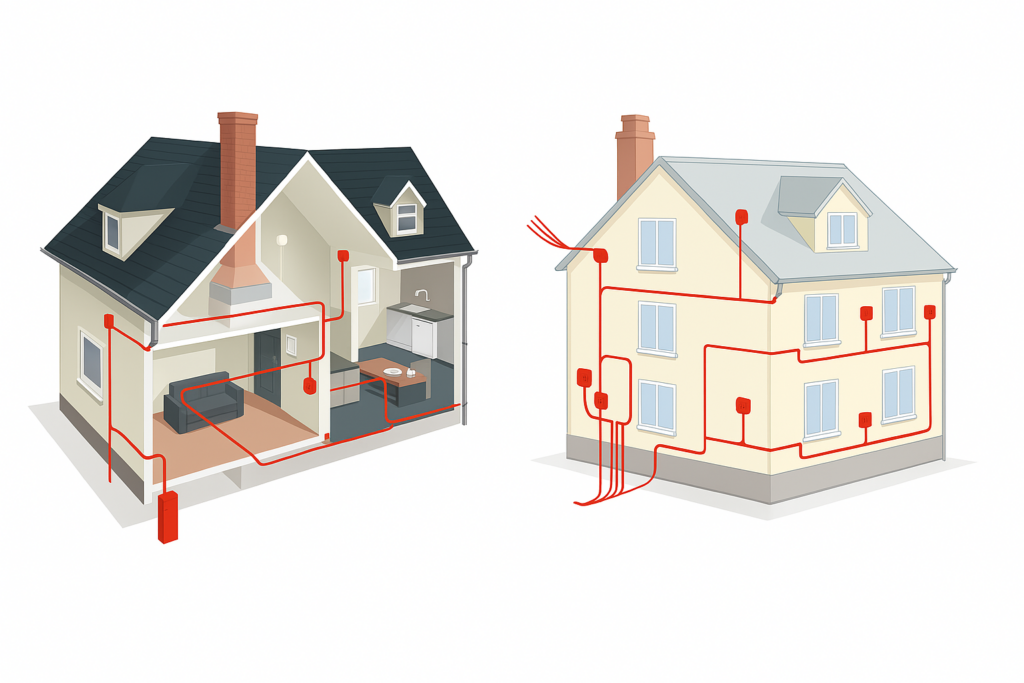
First Fix: Structural Electrical Work
The first fix phase begins before plastering or decoration and includes all hidden cabling work:
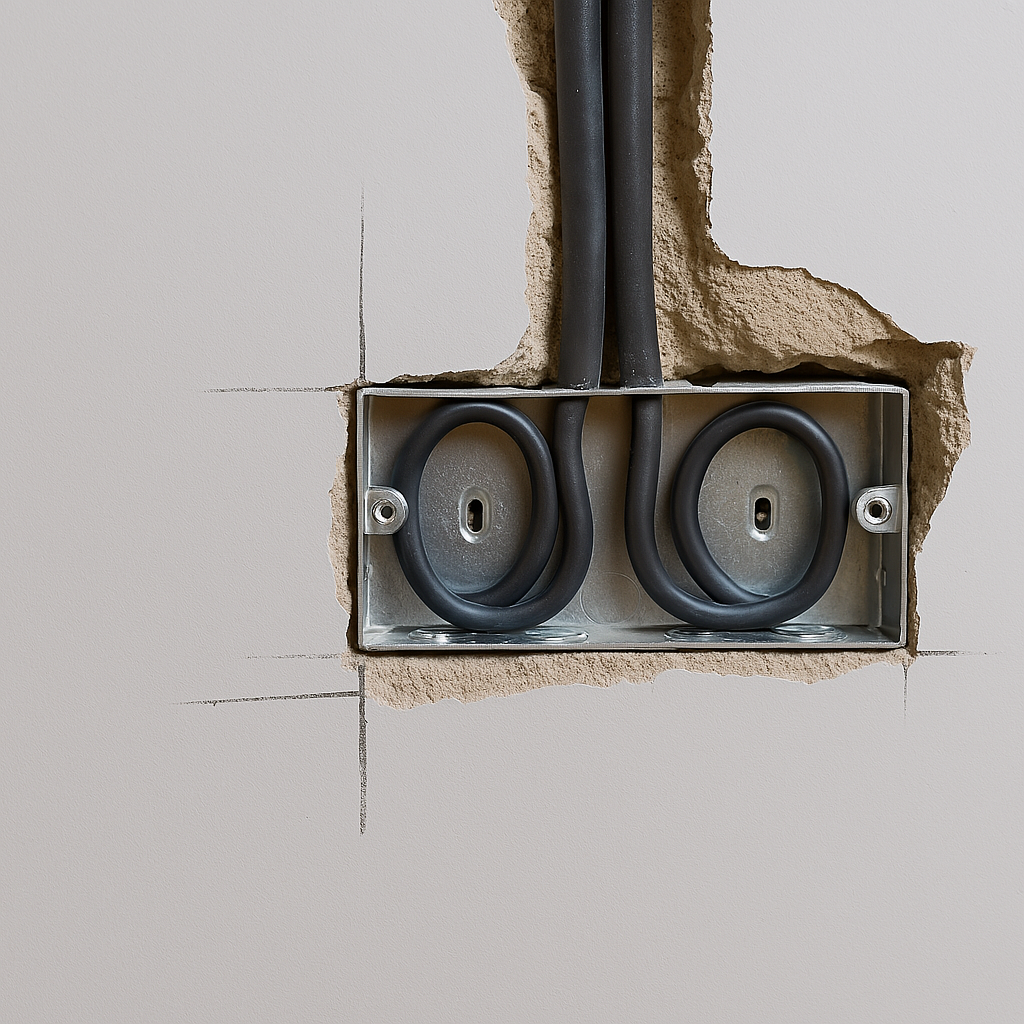
Chasing into walls and lifting floorboards
Fitting new back boxes
Running new power and lighting circuits
Routing cables for smoke detectors, alarms, doorbells, and data
To ensure compliance with UK safety standards, make sure to follow strict guidelines when chasing walls:
Chasing Rules (from BS 7671 – 18th Edition):
Vertical chases: Max one-third of wall thickness
Horizontal chases: Max one-sixth of wall thickness
Never chase both sides of a wall in the same location
All chases must be straight — avoid diagonal routes
Follow safe zones, e.g., 150mm from wall edges or directly above/below switches and sockets
Checkout the BS 7671 – 18th Edition IET Wiring Regulations…. Here
Second Fix: Finishing & Final Connections
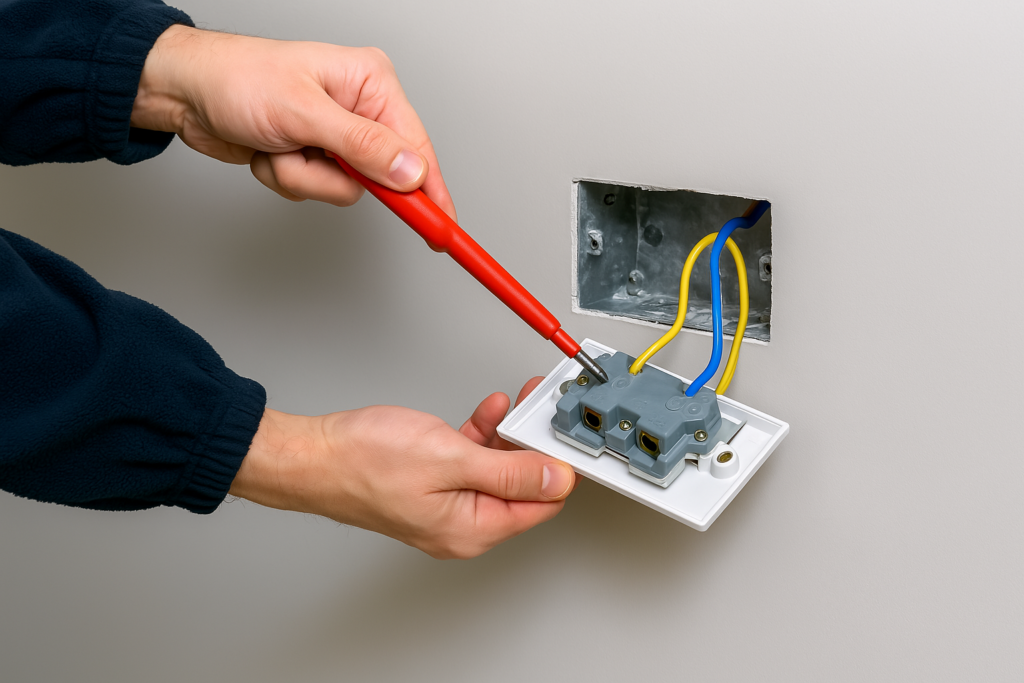
Once plastering and structural work are complete, the second fix stage begins. This step focuses on fitting accessories and final connections, including:
Wiring in faceplates, sockets, and switches
Installing pendant lights, spotlights, and wall fittings
Connecting cookers, electric showers, and extractors
Making final links to the consumer unit
Performing safety testing and issuing certificates
Every new or altered circuit must be thoroughly tested by the electrician, followed by the provision of a certificate of compliance.
What Is an Electrical Installation Condition Report (EICR)?
An EICR is a vital document provided after a full inspection of your property’s electrical system. Only qualified electricians can issue one. It helps identify:
Wear, damage, or deterioration in fixed wiring
Non-compliance with BS 7671 standards
Potential hazards such as electric shock or fire risks
Types of EICR:
Visual Condition Report – Limited to visible checks (suitable for newer installations)
Periodic Inspection Report – Full testing of all circuits, including hidden cabling and fixed wiring
Frequency:
Every 10 years for homeowners
Every 5 years for landlords
Every change of occupancy
Any findings listed as C1 (danger present), C2 (potentially dangerous), or FI (further investigation required) must be resolved before the system can be considered safe.
UK Wiring Regulations (18th Edition – BS 7671)
All rewiring work must comply with:
When rewiring a house, compliance with UK wiring standards is not optional — it’s the law. You must meet the following:
Key Regulations:
Follow BS 7671 – IET Wiring Regulations (18th Edition)
Comply with Part P of UK Building Regulations
Provide RCD protection on all new circuits
Route cables within recognised safe zones
Ensure exposed metal boxes are properly earthed
Use mains-powered, interlinked smoke/heat alarms
Match bathroom fittings to appropriate IP ratings
Perform final tests and issue Electrical Installation Certificates (EICs)
These standards help safeguard property and life while ensuring energy efficiency and long-term reliability.
Essential Tools to Get The Job Done!
Professionals and DIYers will typically need:
- Electrical Tools
- SDS wall chaser or multi-tool
- Cable reels (Twin & Earth, CPC)
- Consumer units with RCD/RCBOs
- Dry lining boxes and metal back boxes
- Surface and flush sockets/switches
- Voltage Testers and Multimeters
- Accessories: insulation tape, grommets, trunking, etc.
Useful Accessories:
Insulation tape, grommets, trunking, and clips
IP-rated fittings for wet areas
Cable management gear for neat installations
Need supplies? View our full Electrical Tools and Power Tools and Accessories collection for certified gear at trade prices.
Final Thoughts on Rewiring a House
A full or partial rewire is a major job — but when carried out correctly, it drastically improves the safety, usability, and future-proofing of any UK home. By following best practices, complying with BS 7671, and using the right tools, you’ll ensure the work is both legally compliant and built to last.
Whether you’re a homeowner planning a project or a professional preparing for a large rewire, make sure you understand the process from first fix to final testing — and always prioritise safety.