

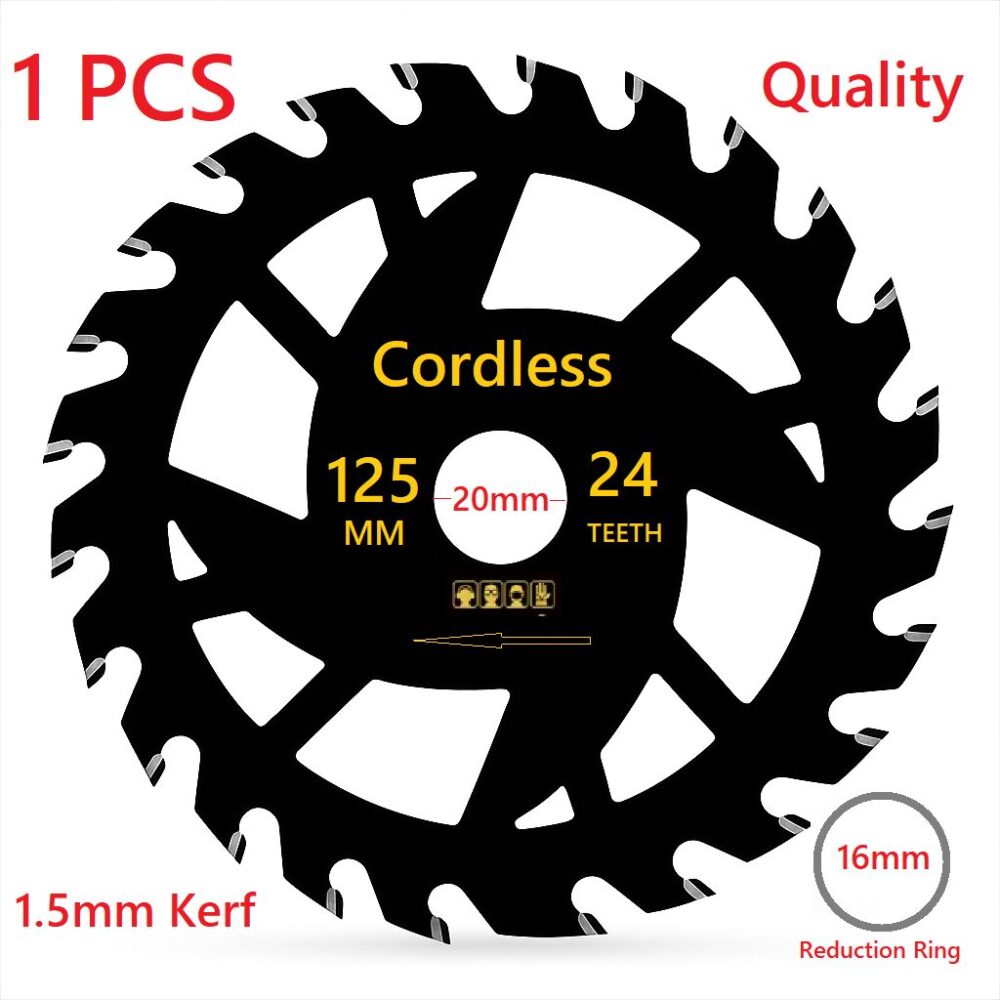

How to Choose the Correct Circular Saw Blade
Choosing the correct circular saw blade makes a huge difference to cut quality, speed, and safety. The wrong blade can leave rough edges, chip laminate, overload your saw, or simply make the job harder than it needs to be. Whether you are cutting softwood, hardwood, sheet material, laminate, aluminium, or plastics, understanding blade size, number of teeth, tooth pattern, and kerf will help you get cleaner and more efficient results.
This guide explains how to choose the right blade for the material you are cutting, the finish you want, and the type of saw you are using. If you are ready to browse products, see our Circular Saw Bladesrange.
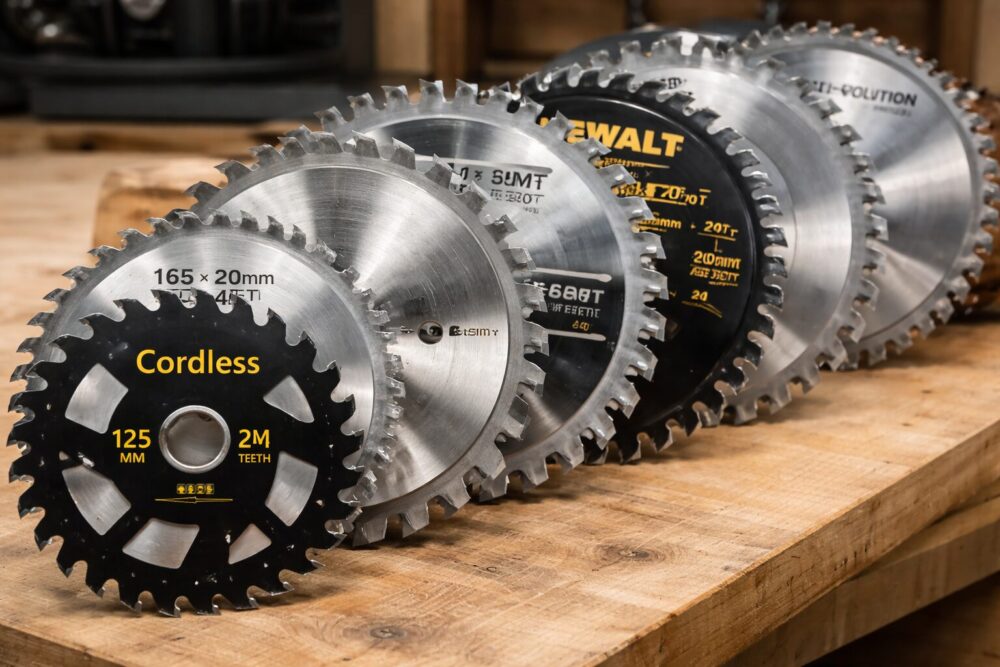
Circular saw blades come in different diameters, tooth counts & tooth patterns for each cutting job.
Quick Circular Saw Blade Selection Table
| Material | Recommended Teeth | Typical Tooth Type | Best For |
|---|---|---|---|
| Softwood | 24–40T | ATB / General Purpose | Fast cutting and general building work |
| Hardwood | 40–60T | ATB | Cleaner cuts and better finish |
| Plywood | 48–60T | ATB | Reduced splintering and cleaner crosscuts |
| Laminate | 60–80T | TCG | Fine finish with less chipping |
| MDF / Chipboard | 48–60T | TCG / Fine Cut | Smooth cuts in sheet materials |
| Aluminium | 60–80T | TCG | Clean cuts in non-ferrous metals |
| Plastic | 40–60T | TCG / Fine Cut | Controlled cutting with reduced grabbing |
Tip: Fewer teeth usually cut faster, while more teeth usually give a smoother finish.
1. Start With the Correct Blade Diameter
The first thing to check is the blade diameter. Your saw is designed to take a specific blade size, and you should always use the diameter recommended by the saw manufacturer. Common circular saw blade sizes include 115mm, 120mm, 165mm, 184mm, 190mm, 210mm and 235mm.
A smaller blade may reduce cutting depth, while a larger blade may be unsafe or may not fit the guard properly. Before buying a blade, check both the diameter and the bore size so the blade fits the saw correctly.
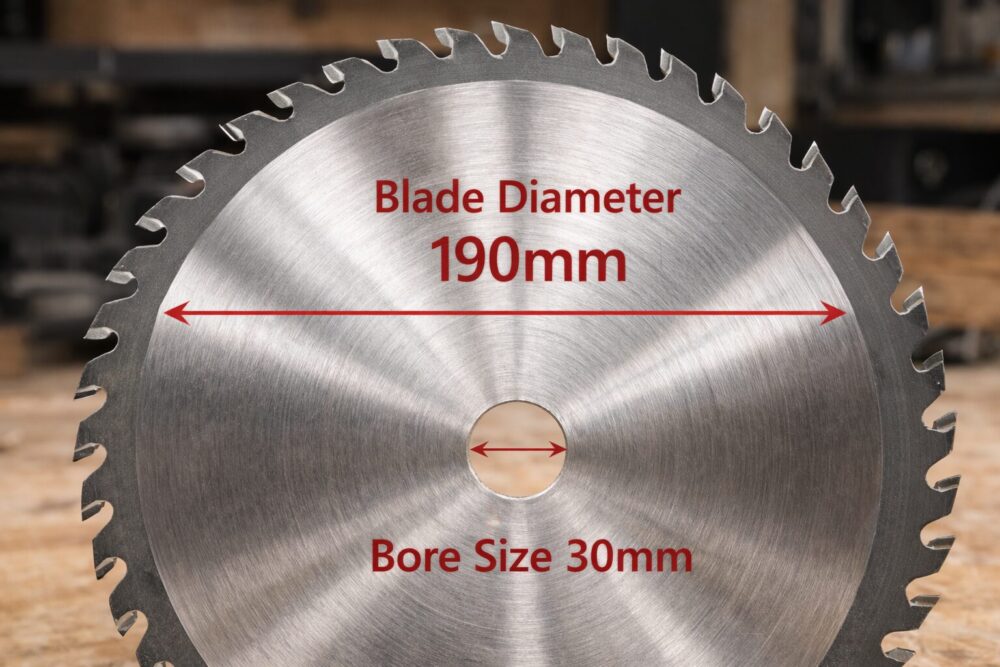
Always match the blade diameter and bore size to your saw.
2. Understand What the Number of Teeth Means
The number of teeth on a circular saw blade has a major effect on the speed and finish of the cut.
- 24T to 30T: Faster cuts, ideal for rougher rip cuts in timber.
- 40T: Good general-purpose option for many wood cutting tasks.
- 48T to 60T: Better finish for plywood, sheet material, and cleaner crosscuts.
- 60T to 80T: Fine finish blades for laminate, melamine, aluminium, and detailed work.
If you need speed for site work or first-fix jobs, a lower tooth count is often best. If you need a neat visible finish, such as when cutting kitchen panels, laminate flooring, or veneered boards, a higher tooth count is usually the better choice.
In simple terms:
- Fewer teeth = faster cut
- More teeth = cleaner cut
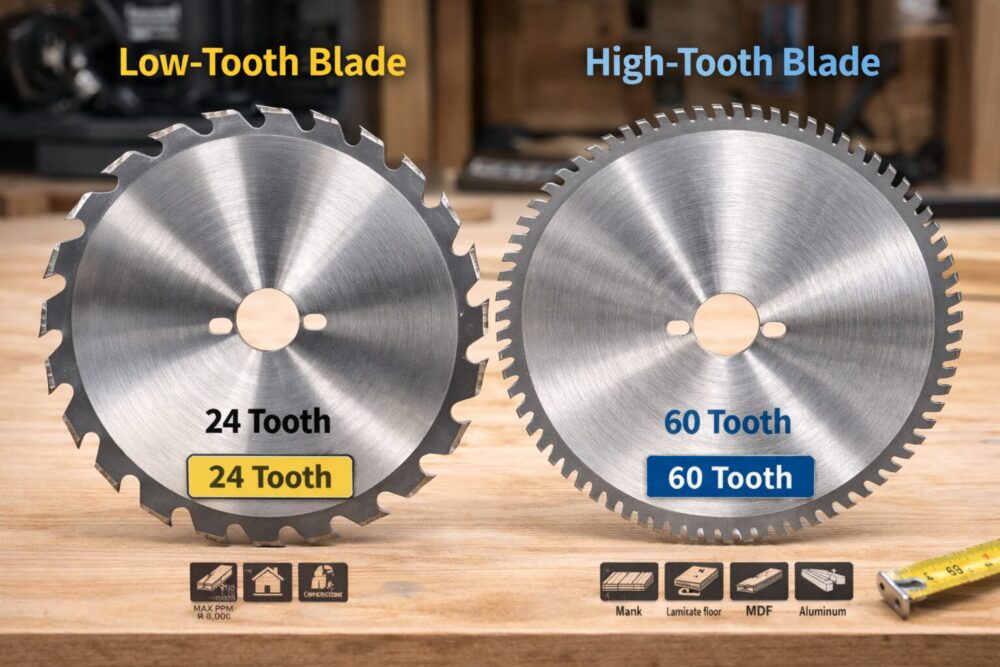
Lower tooth count blades cut faster, while higher tooth count blades usually leave a finer finish.
3. Choose the Right Tooth Type
Not all circular saw blades use the same tooth shape. The tooth pattern affects how the blade cuts and what materials it is best suited to.
ATB – Alternate Top Bevel
ATB blades are one of the most common choices for wood. The teeth alternate left and right, helping the blade slice cleanly through timber fibres. These are a very good option for softwood, hardwood, plywood, and general wood cutting.
FTG – Flat Top Grind
FTG blades are often used for ripping timber quickly. They are more aggressive and are designed for efficient cutting along the grain rather than producing the neatest possible finish.
TCG – Triple Chip Grind
TCG blades are commonly used for harder materials such as laminate, MDF, plastics, and non-ferrous metals like aluminium. They are designed to stay durable under tougher cutting conditions and can help reduce chipping on brittle surfaces.
If you mainly cut timber, a good ATB blade covers most jobs. If you want a blade for laminate or aluminium, look for a TCG pattern instead.
4. Blade Kerf and Thickness Matter Too
The kerf is the width of the cut the blade makes. Thin kerf blades remove less material, which means they need less power to cut. This can be especially useful on cordless saws where battery efficiency matters.
- Thin kerf blades: Lower resistance, easier on cordless saws, good for efficient cutting.
- Standard kerf blades: Usually more robust and stable in tougher cutting conditions.
If you are using a compact cordless circular saw, a thin kerf blade can be a smart choice. If you are doing heavier work on a more powerful saw, a standard kerf blade may offer better durability and control.
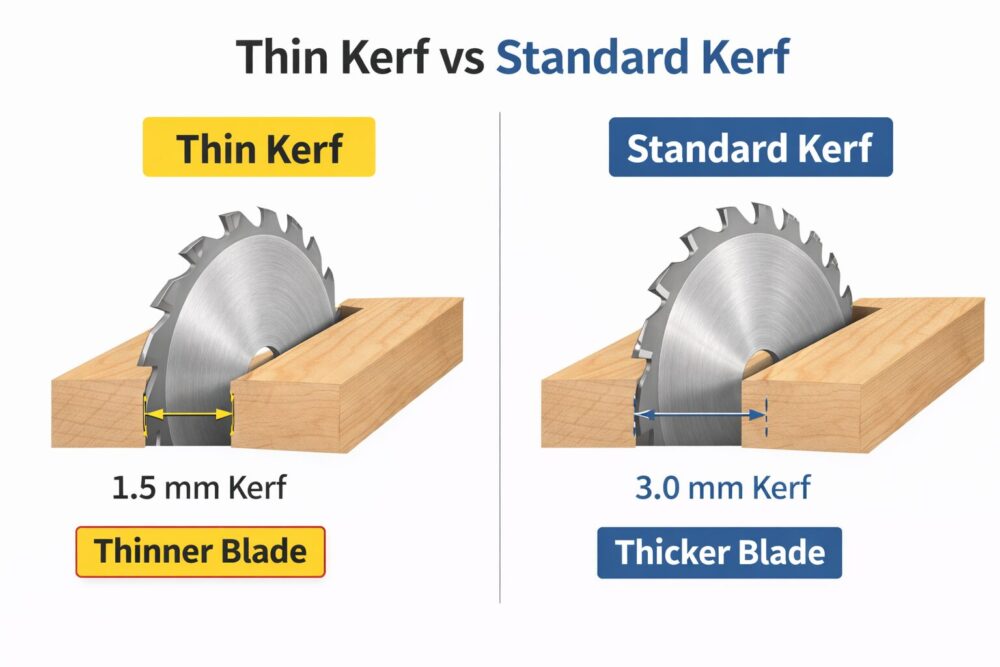
Thin kerf blades remove less material and can be easier
5. Blade Material and Tip Type
Most modern circular saw blades are TCT, which stands for Tungsten Carbide Tipped. These blades are popular because they stay sharp much longer than plain steel blades and are suitable for a wide range of cutting jobs.
For general DIY and trade use, TCT blades are usually the best all-round option. They offer a strong balance of durability, cutting performance, and value.
If you are also looking at drilling accessories, you may want to browse our wider Power Tool Accessoriesrange.
Choosing the Right Circular Saw Blade
Different cutting tasks require different blade designs. Tooth count, tooth shape, and blade geometry all affect how cleanly the blade cuts and how quickly material can be removed.
How Many Teeth Should a Circular Saw Blade Have for Plywood?
Plywood and sheet materials benefit from blades with a higher tooth count.
A blade with 40–60 teeth on a typical 165 mm or 7-1/4 inch circular saw blade will generally produce a smoother cut with less tear-out.
- 24 teeth – Fast cutting but rougher finish
- 40 teeth – Good balance for general woodworking
- 60+ teeth – Cleaner cuts for plywood, laminate, and sheet materials
Using a high tooth count blade helps reduce splintering on plywood veneers and laminated surfaces.
Best Circular Saw Blades for Cutting Kitchen Worktops
Kitchen worktops, laminated boards, and veneered panels require a
fine-tooth TCT (tungsten carbide tipped) blade. These blades produce a much cleaner edge and minimise chipping of decorative surfaces.
For worktop cutting, look for blades with:
- Fine tooth count (typically 48–60 teeth)
- Tungsten carbide tips
- Thin kerf design for smoother cuts
Cutting slowly and supporting the work surface properly will also improve results and reduce edge damage.
Ripping vs Crosscut Circular Saw Blades
Circular saw blades are often designed for either ripping cuts (cutting along the wood grain) or crosscuts (cutting across the grain).
- Ripping blades usually have fewer teeth and larger gullets to remove material quickly.
- Crosscut blades use more teeth to create a smoother finish across the wood grain.
- Combination blades attempt to balance both cutting styles for general workshop use.
If you regularly cut both solid timber and sheet materials, a medium tooth count blade can offer a good compromise between cutting speed and finish quality.
6. Match the Blade to the Material You Are Cutting
One of the most common mistakes is trying to use one blade for every job. While a general-purpose blade can handle many tasks, you will often get better results by choosing a blade designed for the specific material.
For Softwood
A 24T to 40T blade is usually suitable for fast and efficient cutting. This is ideal for framing timber, studwork, roofing battens, and general construction work.
For Hardwood
Choose a 40T to 60T blade for a cleaner finish. Hardwood is denser than softwood, so a finer blade often produces better results with less tear-out.
For Plywood and Veneered Boards
Use a higher tooth count blade, often 48T to 60T, to help reduce splintering and leave a cleaner edge.
For Laminate Flooring and Melamine
A fine tooth blade, often 60T to 80T and often TCG, is usually the best option. These materials chip easily, so a fine cutting blade is important.
For MDF and Chipboard
These materials benefit from fine tooth blades that produce a smooth finish and reduce breakout on the top surface.
For Aluminium and Non-Ferrous Metals
Use a blade specifically rated for non-ferrous metals, normally with a TCG tooth pattern and higher tooth count. Never assume a wood blade is suitable for metal cutting.
For Plastics
A fine tooth blade helps reduce grabbing, melting, and rough edges. Cutting speed and feed rate also matter when working with plastics.
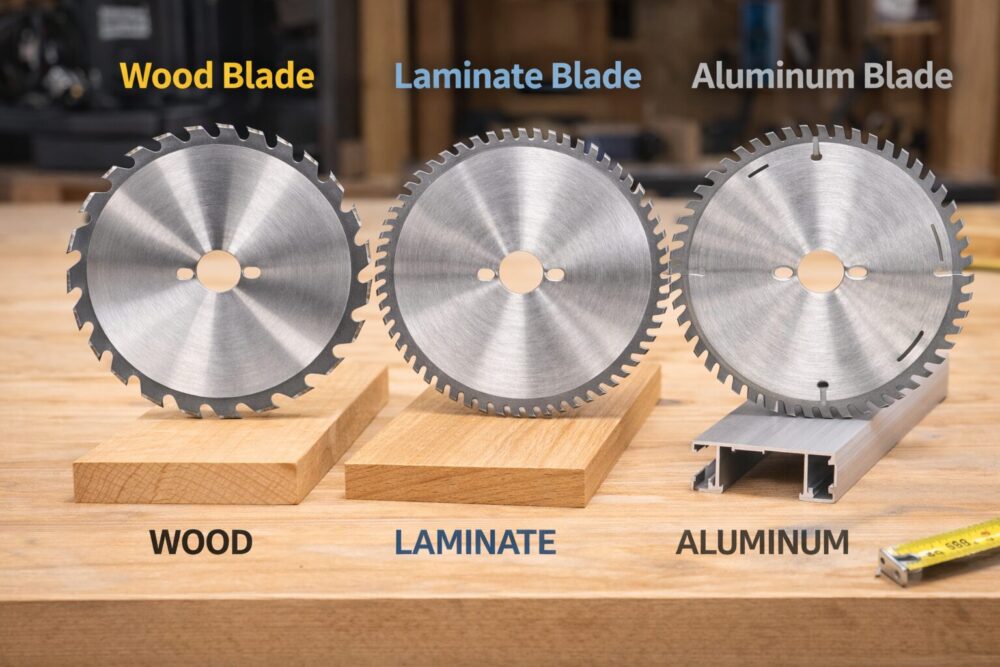
Different materials often need different blade types for the best results.
7. Think About the Type of Cut You Need
It is not only the material that matters. You should also think about the type of cut you need to make.
- Rip cuts: Cutting along the grain of timber. Lower tooth counts are often better.
- Crosscuts: Cutting across the grain. Higher tooth counts usually give a cleaner edge.
- Finish cuts: Visible cuts where appearance matters. Use a finer blade.
- Fast construction cuts: Speed matters more than finish. A lower tooth count is often suitable.
If your work varies, a good general-purpose blade may be the most practical starting point. If you frequently cut sheet material or finished surfaces, keeping a fine-cut blade ready is worthwhile.
8. Corded vs Cordless Circular Saws
The type of saw you use also influences blade choice. Cordless saws often benefit from thin kerf blades because they reduce drag and help the motor work more efficiently. Corded saws usually have more consistent power and may handle heavier blades more comfortably.
If you are choosing blades for a cordless saw, look for efficient cutting performance without overloading the tool. This can improve both battery life and cutting speed.
9. Do Not Ignore Maximum RPM Rating
Every blade has a maximum safe operating speed. Always make sure the blade is rated for the saw you are using. Never fit a blade with an RPM rating lower than the no-load speed of your saw.
For safe accessory selection across grinders and cutting tools, our Disc RPM Calculator may also be useful.
10. Signs You Are Using the Wrong Blade
If you notice any of the following, it may be time to change to a more suitable blade:
- Excessive splintering or chipping
- Burn marks on the material
- Slow cutting speed
- Overloading or straining the saw
- Rough finish when a clean edge is needed
- Blade grabbing or snatching in the material
Sometimes the issue is simply a blunt blade, but often it is because the blade type is not suited to the job.
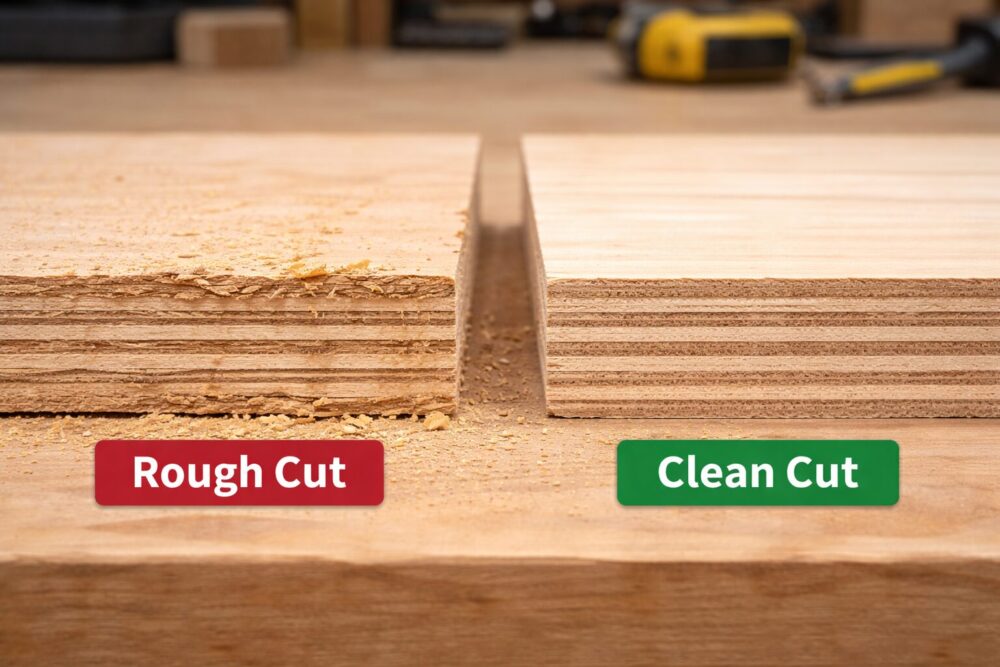
The correct blade can make a noticeable difference to cut quality.
11. A Simple Rule of Thumb
If you want one easy way to remember circular saw blade selection, use this:
- Fast rough cuts in timber: low tooth count
- General-purpose wood cutting: mid tooth count
- Fine finish cuts: high tooth count
- Laminate, aluminium or plastics: material-specific fine blade, often TCG
This simple approach will help you avoid the most common mistakes when buying a blade.
Shop Circular Saw Blades at Xcatalogue
At Xcatalogue, we are expanding our range of circular saw blades and other cutting accessories for trade and DIY use. Whether you need a fast-cutting blade for site work or a fine finish blade for cleaner results, choosing the correct blade helps you cut more efficiently and achieve a better finish.
If you also need blades for curved cuts, fine detail work, or other cutting tasks, browse our related ranges of Jigsaw Blades, Multi-Tool Blades, and Hacksaw Blades.
Frequently Asked Questions
What is the best circular saw blade for wood?
For general wood cutting, a TCT blade with around 24T to 40T is often a good choice. For a finer finish, move up to 48T or 60T depending on the material and cut quality required.
Does more teeth mean a better circular saw blade?
Not always. More teeth usually mean a smoother cut, but fewer teeth can be better for faster cutting and rougher construction work. The best blade depends on the job.
What blade should I use for laminate flooring?
A fine tooth blade, often around 60T to 80T and commonly with a TCG tooth pattern, is usually better for laminate because it helps reduce chipping.
What is a thin kerf circular saw blade?
A thin kerf blade cuts a narrower slot, removing less material. This reduces resistance and can make cutting easier, especially on cordless saws.
Can I use a wood cutting blade on aluminium?
It is better to use a blade specifically designed and rated for non-ferrous metals. These blades are made to cut aluminium more safely and cleanly.